
Articles

The Fed’s hawkish hold, risk tolerance and carry trades

Signals from the Fed encounter fragile geopolitics and carry-driven markets
/images/default-source/global-library/authors/naomi-fink37b66e2e-615b-4a7c-ab6a-112269e089d0.tmb-medium.jpg?Culture=en&sfvrsn=a98a66c6_2
Naomi Fink
Chief Global Strategist and Chief Economist
18 June 2026
3 min read
/images/default-source/global-library/insights/2026/thumbnails/fed-building.tmb-rs800x600.jpg?Culture=en&sfvrsn=4d6ea727_1
The Fed’s hawkish hold reinforced higher-for-longer expectations, lifting yields and the dollar. While easing geopolitical tensions support near-term risk sentiment, persistent inflation risks and crowded positions may leave carry trades dominant but increasingly vulnerable to policy and intervention shocks.

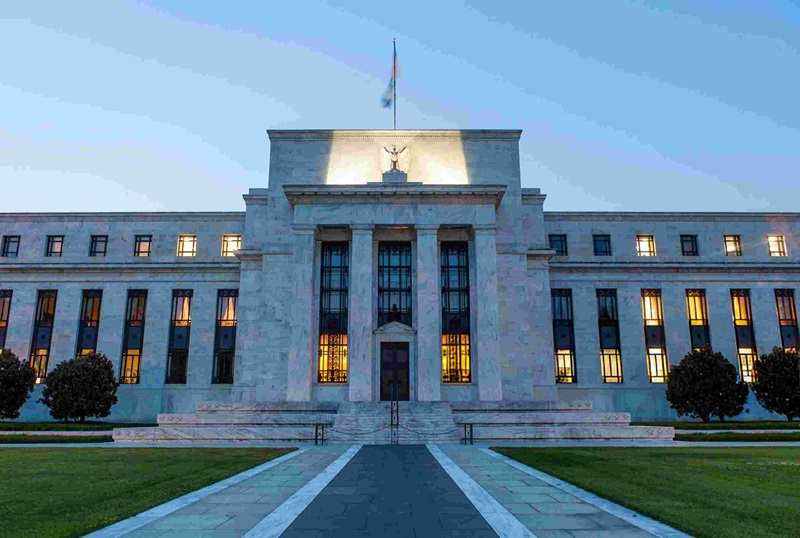
As widely expected, the Federal Reserve (Fed) announced on 17 June that it had left interest rates steady in a 3.5–3.75% range. However, the policy statement, Summary of Economic Projections (SEP) and Chair Kevin Warsh’s inaugural statement were collectively seen as hawkish. Not only was the statement’s easing bias removed, but the Federal Open Market Committee (FOMC)’s median forecast for 2026-2027 was moved higher. In line with his reluctance to provide forward guidance, Warsh declined to submit his own outlook—which was also reflected in the brevity of the statement. 

Of the 18 officials who submitted projections, nine expected at least one rate hike in 2026, while six projected two, marking a more hawkish outlook than the previous SEP. At the same time, growth and unemployment projections offered a moderately weaker forecast for the economy, albeit from still-robust levels. In contrast, both headline and core CPI projections showed a material shift higher across the range of forecasts compared to the March SEP. Accordingly, the dollar rose, the 2-year US Treasury sold off sharply and emerging currencies weakened. That said, dollar/yen still shows signs of carry appetite, with markets once again focusing on US-Japan yield differentials.

Hormuz developments giving rise to risk-on hopes

The reported signing of a US-Iran memorandum of understanding (MOU) on the Strait of Hormuz has prompted markets to reassess the immediate oil-risk premium. This development between the US and Iran may indeed be a positive, but it does not indicate a full resolution. Transit flows through the Strait are yet to fully resume and the 60-day nuclear negotiation window is unresolved. Although a mutual off-ramp is visible, its still-fragile state could be a source of volatility in the coming days. 

Meanwhile, additional inflationary pressure persists in the background. Even with de-escalation, delays in reopening the Strait and lagged pass-through of energy price rises and supply shocks can keep inflation expectations elevated. As a result, the Fed is unlikely to consider the inflation shock resolved until the Strait is fully reopened, and CPI and PCE data confirm that restored traffic is positively impacting inflation.

Dollar/yen: carry still dominant but risk/reward is changing

In the near-term, yield differentials continue to support dollar/yen. This is particularly noticeable in the sharply higher US front-end pricing after the Fed’s statement. The reaction by the US front-end contrasted with the muted market response following the Bank of Japan’s policy decision earlier in the week, even though the Japanese central bank actually delivered a rate hike. However, over time, hawkish central banks may ultimately become a headwind to carry trades, because tighter financial conditions could reduce leverage and risk appetite. Needless to say, this is not how markets currently perceive the situation.

Intervention risk becoming more relevant

The drivers of dollar/yen strength are now less easily explained by oil/petrodollar demand. With risk premia expected to fall after the Hormuz MOU signing, the renewed focus on relative yield differentials appears inconsistent. At the same time, speculative positioning has become stretched, raising the risk of intervention. According to Bloomberg/CFTC data, leveraged investors’ net yen short positions have reached their highest levels since July 2024, a period when Japanese authorities intervened in the currency market.  Even if carry does not unwind organically, intervention could force a sharp position squeeze.

Related Insights

The information on this website is for informational purposes only and is not intended to be an offer, or a solicitation of an offer, to buy or sell any product or service to any person in any jurisdiction where such offer, solicitation, purchase or sale would be unlawful under the laws of such jurisdiction.

Moreover, the information in this website will not affect Amova Asset Management America, Inc.’s (“Amova AM”) investment strategy in any way. The information and opinions in this website have been derived from or reached from sources believed in good faith to be reliable but have not been independently verified. Amova AM makes no guarantee, representation or warranty, express or implied, and accepts no responsibility or liability for the accuracy or completeness of this document. No reliance should be placed on any assumptions, forecasts, projections, estimates or prospects contained within this document. This website should not be regarded by recipients as a substitute for the exercise of their own judgment. Opinions stated on this website may change without notice.

In any investment, past performance is neither an indication nor guarantee of future performance and a loss of capital may occur. Estimates of future performance are based on assumptions that may not be realized. Investors should be able to withstand the loss of any principal investment. The mention of individual securities, sectors, regions or countries within this document does not imply a recommendation to buy or sell. All information contained in this website is solely for the attention and use of the intended recipients. Any use beyond that intended by Amova AM is strictly prohibited.

This website may contain links to the website of certain overseas affiliates of Amova Asset Management Americas, Inc. (“Amova AM”). However, providing such links should not be considered as offering or solicitation by Amova AM of any product or service of its affiliates to any person.

Additional information can be found under the Disclaimers [https:us.amova-am.com/institutional/legal-privacy-policy/disclaimer] section of this website.

US
This website is for information purposes only and is not intended to be an offer, or a solicitation of an offer, to buy or sell any investments or participate in any trading strategy. An offering of any investments, securities or investment advisory services with respect to securities may only be made by receipt of relevant and complete offering documentation and agreements, as applicable. Any offering or distribution of a Fund in the United States may only be conducted via a licensed and registered broker-dealer or a duly qualified entity. Amova Asset Management Americas, Inc. is a United States Registered Investment Adviser. 

Canada
The information on this website should not be considered a solicitation to buy or an offer to sell a security in Canada. The information provided herein does not constitute any form of financial opinion or investment advice on the part of Amova AM and it should not be relied on as such. It does not constitute a prospectus, offering memorandum or private placement memorandum in Canada, and may not be used in making any investment decision. Additional information can be found under the Disclaimers section of this website.